
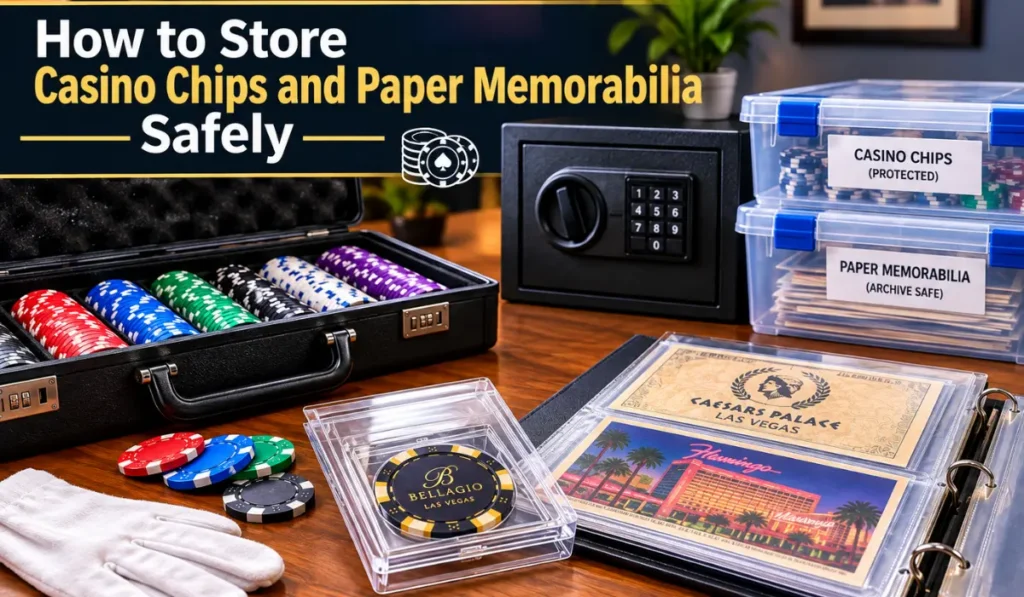
How to Store Casino Chips and Paper Memorabilia Safely
Casino chips and paper memorabilia are damaged by the same three things: light, humidity, and the wrong storage materials, but each requires a different fix. Casino chips have developed one of the most active and specialized collecting communities. Each type needs special conditions in which it should be stored so it remains intact without ruining its value for prolonged periods. This guide provides answers to your questions, like how to store casino chips, casino memorabilia preservation methods, and what to avoid while storing casino chips.
What Damages a Casino Chip or Paper Memorabilia Collection?
UV light exposure, unstable humidity, and contact with non-archival materials like PVC plastics or acidic paper are what primarily damage casino chips and paper items, each of which causes a different type of deterioration. Overexposure to light leads to fading of the chips. Using the wrong cleaning products can also expose the chips to humidity and thus damage them. Warping/ molding can take place if stored in humid places.
Yellowing, discoloration, and fading are irreversible damages for casino chips and memorabilia. Acidic storage materials contribute to chemical deterioration, reducing the value of the chips. Storing memorabilia near materials containing acids can cause sweating and damage the collectibles. Most chip colors are dyes, which will react with PVC-containing vinyl flips, causing color transfer and a smeared appearance. Give extra care when cleaning the chips and memorabilia by seeking advice from professionals.
How Should You Store Casino Chips?
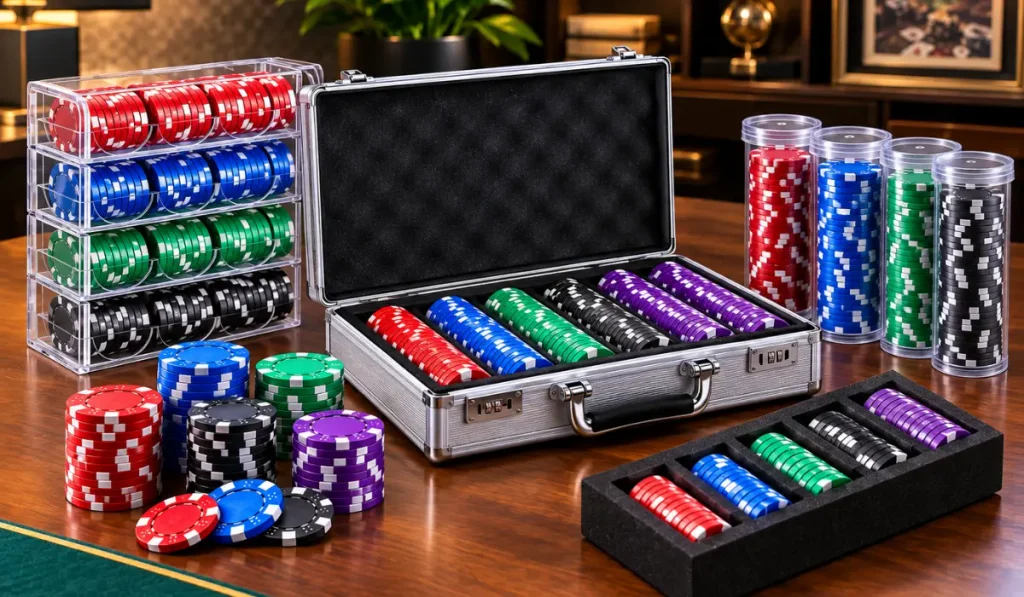
Casino chips should be stored in acid-free, PVC-free holders. High-value chips must be stored in Air-tites individually. Chip tubes or wooden cases may be best for bulk storage. Archival binders with coin-sleeve pages can be used for organized reference collections. If you wish to show off your casino chip collection, best to use wooden or acrylic casino chip display cases that serve the purpose and protect the collectibles from external damage-causing factors simultaneously.
Different casino chip storage methods solve specific issues:
- Air-tites (39mm standard)- best individual protection, least practical for browsing. The foam ring is designed to keep the chips completely safe for long-term storage.
- Chip tubes/racks- good bulk protection, minimal display value.
- Binders with archival sleeves- easiest to browse and reference, moderate protection
- Wood/acrylic display cases- best for showcasing, least protective against light unless UV-filtered
How Should You Store Paper Memorabilia (Napkins, Matchbooks, Room Keys)?
Paper casino memorabilia should be stored flat in acid-free, lignin-free folders or polyester/polypropylene sleeves, or free archival folders. Storing casino paper memorabilia and preserving casino napkins and matchbooks need different storage conditions to address their own specific cause of damage. To properly store paper memorabilia or ephemera from casinos, you must protect them from moisture, light, and acid degradation. Keep them away from adhesives and direct light. Fragile items must be given a rigid backing board for support to prevent them from breaking.
- Napkins/matchbooks- They should be stored flat, with acid-free interleaving to prevent ink transfer; no tape or glue must be used. You can also slip them into polypropylene or polyester sleeves.
- Room keys (metal or plastic)- As most of them are metal or plastic, they have a low risk of acid damage; separating still benefits them to prevent scratching. Specifically note that keycards can demagnetize near strong magnets.
- Photographs/postcards: They are more vulnerable and can easily fade if not given extra care. Therefore, you must use sleeves that pass the Photographic Activity Test (PAT), not just “acid-free” labeling.
Each material needs a customised storage method that protects it from possible causes of damage. Storing everything together would only destroy the items rather than preserve them. Choosing a particular storage solution just because it was cheaper than the other won’t serve your purpose of preservation. Always go for the best option considering the material you want to preserve, how much protection it offers, cost-effectiveness, and accessibility.
What Storage Materials Should You Avoid?
Avoid PVC plastic holders, rubber bands, standard tape, cardboard boxes not labeled acid-free, and sunlit or damp storage areas, since each of these actively accelerates fading, sticking, or chemical degradation. PVC and other unknown plastic materials should be completely avoided for collection storage; instead, try recommended stable plastics such as polyester, polyethylene, or polypropylene. PVC off-gassing/ chip sweat is commonly seen damaging collectibles.
Tapes and rubber bands are also damaging to collectibles and must be avoided. Residues left by tape adhesives cause deterioration over time. Prefer Acid- and lignin-free storage materials over ordinary cardboard for paper memorabilia preservation. Maintain a cool, stable environment for casino chip humidity storage to prevent humidity-driven mold and warping. Intense light exposure can cause fading and deterioration of color and other properties. The Library of Congress recommends storing paper collectibles at 65-70°F with 30-50% relative humidity. In short, avoid low-quality plastic, excess light exposure, contact with acid or lignin, and humidity in storage conditions for prolonged preservation quality.
How Do You Store a Mixed Collection (Chips + Paper Together)?
Storing chips and paper memorabilia together is not recommended, since chips can be heavy or abrasive against paper, and paper can trap moisture against metal or clay-composite chips. General preservation methods require storing different materials in their favourable storage conditions. However, if you want to store your collectibles based on their themes, you might have to consider options that prevent damage to both the casino chips and the paper memorabilia. Exceptional storage solutions include SAFE’s combined chip-and-card binder systems for combined storage solutions.
When Should You Get a Collection Professionally Appraised or Conserved?
Your rare or high-denomination chip collections deserve a professional appraisal or conservation. Also, consider professional conservation if obsolete casino paper items are in fragile condition, or when visible deterioration has already started. Seek professional appraisal if you are keen on protecting your casino chip and paper memorabilia collection. The American Numismatic Association, which has recognized CC>CC’s publication with multiple awards, maintains conservation resources for collectors.
Conclusion
As we have seen in this article, chips and paper memorabilia need different storage materials but the same core conditions. Stable humidity, no direct light, and archival-only materials are the conditions in which these collectibles must be stored. Getting this right the first time is far easier than repairing damage later. This article has answered questions like how to store casino chips, material-specific storage solutions, what to avoid, and more about storage conditions of casino chips and paper memorabilia.
FAQs about how to store casino chips
Individual air-tite holders or archival binders with coin-sleeve pages offer the best long-term protection, keeping chips away from light, humidity, and PVC plastics.
It’s better to store them separately; chips can scratch or crush paper items, and paper can trap moisture against chip surfaces.
Yes, UV light fades chip colors and inlays over time, so chips should be displayed under UV-filtered glass or kept in storage away from direct light.
Avoid PVC plastics for both chips and paper items; PVC can off-gas and cause discoloration or a sticky residue known among collectors as ‘chip sweat.