
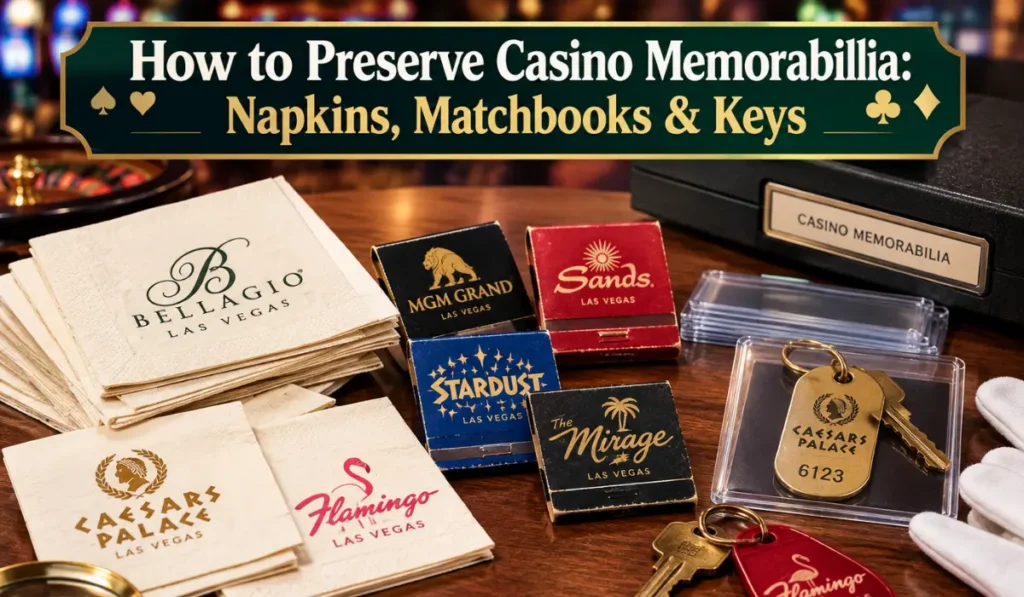
How to Preserve Casino Memorabilia: Napkins, Matchbooks & Keys
Casino napkins, matchbooks, and room keys were expected to be thrown away, and most people did. Now, the surviving casino ephemera from closed casinos has real collector’s value.
This guide covers everything you need to know about preserving defunct casino memorabilia, from how to identify, preserve, and store types of casino ephemera such as napkins, matchbooks, and room keys in the right way.
Why Do Collectors Value Casino Ephemera?
Collectors consider casino ephemera valuable because they were designed to be disposable, and the casinos that produced them no longer exist. Therefore, surviving pieces of defunct or imploded casinos become rare physical records of properties that once existed and were part of many people’s lives.
Casino ephemera, which are the collectible pieces of casino history, interest collectors because of their rarity and the history they are part of. Most of the popular collectibles have unique designs and materials. The specific detailing on the ephemera makes it more valuable among collectors. Various authentication techniques are used to identify original pieces to make informed decisions and protect their investments.
How Do You Identify and Date Casino Matchbooks?
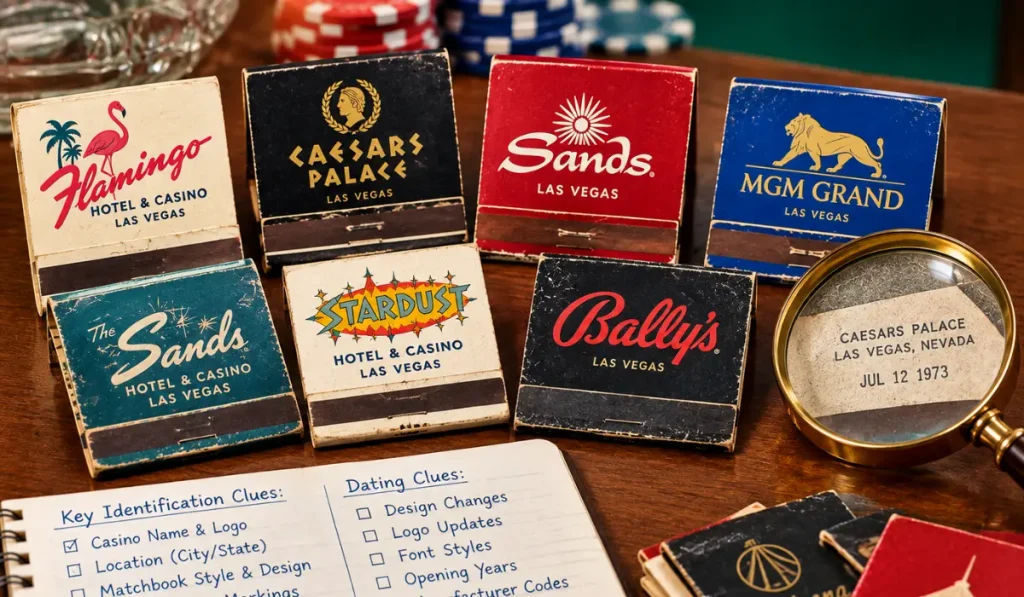
You can identify and date casino matchbooks from the casino name and logo printed on them. You may also find a phone number format with an area code; changes that have happened over the years in phone numbers can be used to identify the era from which the matchbook is from. The striker style of the matchbooks, printed slogans, or entertainment listings reference specific years, and a person with knowledge of matchbooks can most probably be able to identify and date casino matchbooks.
When collecting old casino matchbooks, check the logo provided. Rebranding that may have occurred, typography, and graphic art styles may help in understanding the era in which the matchbook belonged.
The phone number format can also be used to identify the time period. The earlier matchbooks had shorter formats, and later they became longer, adding area codes. You can check when these changes happened and identify the matchbooks.
While earlier resorts and casinos only printed the city and state on their matchbooks, later ones included ZIP codes, which again mark the era. The cover materials and printing styles also changed over time and can be explicitly seen on the matchbooks.
Matchbook collectors determine the value of the matchbook based on the era it belonged to and its condition. An unstruck matchbook with all match stems and unused strikers is of higher value. A struck matchbook has less value, but it can change depending on rarity. The value also depends on cover creasing. Clean colors without any creases are of huge value.
How Do You Preserve Casino Napkins and Matchbooks?
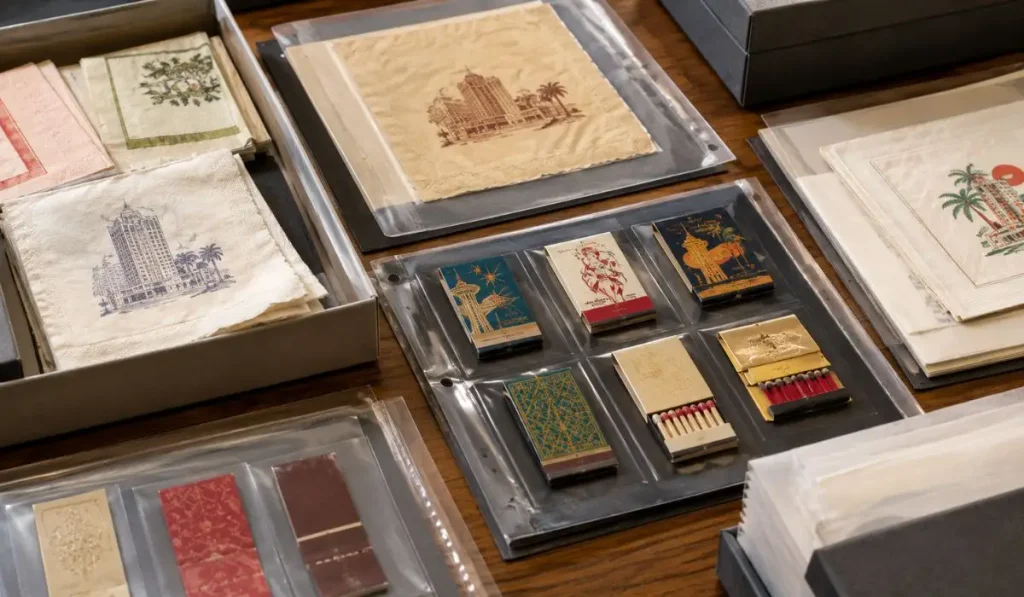
Preservation of casino napkins and matchbooks is no child’s play. Casino napkins and matchbooks should be stored in acid-free, lignin-free sleeves or folders. They should not be exposed to direct light or mounted with tape, glue, or rubber bands, as those can cause staining and adhesive residue over time. It is good to learn how to preserve casino memorabilia before starting casino matchbook and napkin collecting.
Napkins: Flat storage is better for casino napkins than storing them folded or rolled. Folding and rolling can cause creasing, and there is a risk of ripping over time. If the napkins are stacked, they must be in an acid-free place with archival-quality interleaving paper between them to avoid sticking together.
Matchbooks: If possible, store matchbooks with strikers intact, as unstruck matchbooks have more value than struck ones. Using archival-quality backing boards can help prevent bending and creasing. Store them in acid-free, archival-quality storage case boxes in the size of the matchbooks.
Framing for display: when preserving casino memorabilia to display, it should be with UV-filtered glass and acid-free matting. Avoid laminating, as it can cause irreversible damage. Direct adhesive mounting can cause damage and discoloration. Archival photo corners or sleeves should be used for mounting.
How Do You Identify and Preserve Casino Room Keys?
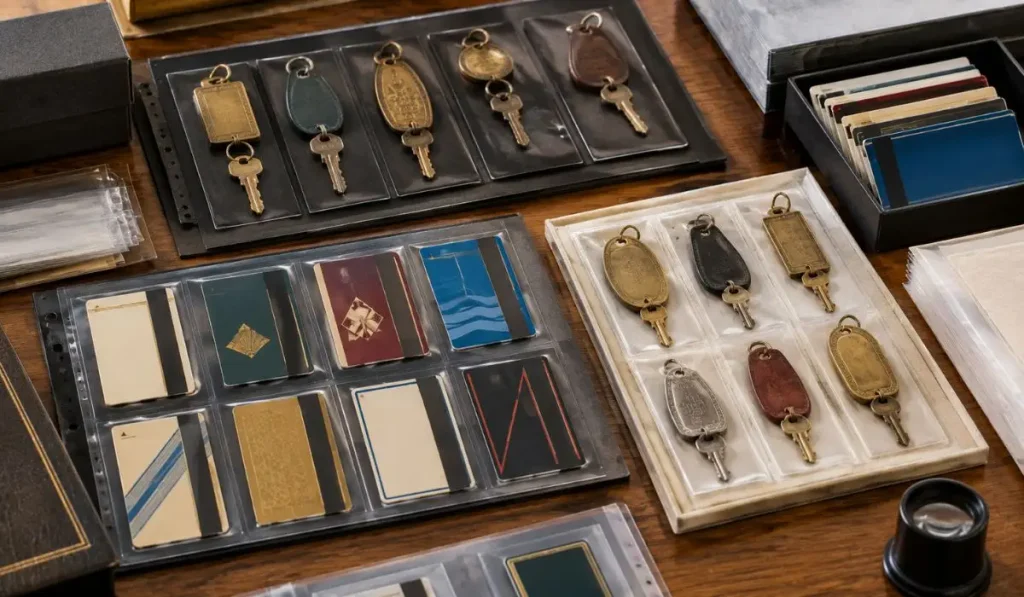
Casino room key identification and preservation usually take different approaches, as there are two casino room key collecting categories: vintage metal keys with embossed fobs from older properties and magnetic or RFID plastic key cards.
- Metal keys: Metal casino room keys, which were commonly used in earlier days, can be identified by the property names engraved on them. Different casinos used different fob shapes and materials, and whether the issuing casino is defunct can be identified through them.
Storing metal keys should be in a dry, safe space away from other metals to prevent scratching.
- Plastic card keys: Plastic card keys have inscriptions of the logo or printed design of the casino they belonged to. The font and colors can determine the time period in which they were made. Examining the card stock also helps. Older plastic cards are usually thicker, while newer ones are thinner and have RFID chips.
To preserve plastic key cards, store them away from strong magnets, as there is a risk of demagnetization, which can wipe or corrupt the magnetic code on the key card. Direct sunlight can cause fading; therefore, they should not be exposed to it.
Plastic card keys are more common and have lower value when compared to metal keys. But they can have increased value if they are from a closed property.
What Ephemera Should You Never Try to Clean or Restore Yourself?
You should never try to clean or repair fragile paper ephemera yourself, as these can be really delicate, and attempting to flatten, erase marks, or remove stains from valuable napkins or matchbook covers can destroy the original surface. It can also reduce the value more than the original intended value.
Ephemera should be left as found when it is rare and has high value. If the original wear shows authenticity, it is best kept untouched. It is better to consult a paper conservator when casino ephemera has active damage that can be fixed.
If ephemera just needs a casual home fix, you can do it in a clean environment with clean hands. Do it if the item has low financial or historic value and the fix will not cause any kind of damage or change to it.
Conclusion
Scarcity and originality make casino ephemera valuable. Preserving casino ephemera must be done after having knowledge about it, as they can get easily damaged.
Storage of casino ephemera should be in a dark, acid-free environment, and napkins, keycards, and matchbooks are best stored flat whenever possible. Keeping it untouched preserves it, as touching it for cleaning and repairing can cause damage, and making casino ephemera look new does not increase its value.
FAQs about Preserving Casino Ephemera
Yes, old casino matchbooks from closed or renamed casinos are valuable, especially if they are unstruck. Matchbooks from casinos that are still operating are not worth much.
Casino napkins can be framed for display using UV-filtered glass and acid-free matting. Using adhesive mounting or standard glass can cause fading and staining over time and reduce the napkin’s value.
If by “cleaning” you mean light dusting, it is fine, but it is better to avoid polishing old casino metal room keys or scrubbing printed card keys. It can damage the card’s original finish and reduce value.
Casino key cards won’t lose their design but can demagnetize if stored near magnets. It is better to keep the key cards away from strong magnets.
Metal casino room keys are more valuable, as they are generally older and rarer. Plastic magnetic or RFID cards are less valuable, and they are common. But they too are valuable if tied to a defunct casino.